What Causes Palpitations , and When to Check Them

It is a sensation that almost everyone experiences at some point: a sudden flutter in the chest, a skipped beat, or a heart that feels as though it is racing for no apparent reason. When you are sitting quietly and suddenly become aware of your heartbeat, something we usually take for granted, it can be deeply unsettling.
Palpitations are one of the most common reasons patients seek a private medical consultation. While the experience can feel dramatic, the majority of palpitations are not caused by a dangerous heart condition. However, because the heart is such a vital organ, the anxiety surrounding these symptoms is entirely understandable.
The purpose of this article is to demystify what is happening when your heart flutters, explore the common triggers, and, most importantly, clarify when you can safely "watch and wait" versus when you need to see a doctor.
When to Seek Urgent Medical Help
Before we explore the various causes of palpitations, it is essential to distinguish between a "bothersome" symptom and a medical emergency.
If you experience heart palpitations alongside any of the following symptoms, please call 999 or attend your nearest A&E department immediately:
Severe chest pain or tightness: Especially if it spreads to your arms, neck, jaw, or back.
Sudden or severe shortness of breath: Finding it difficult to breathe even while resting.
Blackouts or fainting: Losing consciousness, even briefly.
Severe dizziness or feeling "light-headed" as if you are about to collapse.
New and profound confusion or weakness.
These symptoms can indicate that the heart is struggling to pump blood effectively, and they require immediate clinical assessment.
Understanding the Sensation: What is a Palpitation?
Medical professionals define palpitations as an increased awareness of one's own heartbeat. To you, it might feel like:
A sudden "thumping" or pounding in the chest.
A sensation of "skipped" or "extra" beats (often followed by a slightly stronger beat).
A "fluttering" feeling, like a bird trapped in the chest.
A rapid racing that starts and stops suddenly.
In most cases, these sensations are caused by "ectopic" beats, tiny, premature contractions that are a normal part of human physiology. We all have them, but we don't always feel them. When we do, they can feel like a jolt or a pause.

Common Lifestyle and Emotional Triggers
The heart is incredibly sensitive to the chemicals circulating in our bloodstream, particularly adrenaline. Consequently, many palpitations are caused by things happening outside the heart itself.
Stress and Anxiety
The "fight or flight" response is the most frequent cause of palpitations. When you are under pressure or feeling anxious, your adrenal glands release hormones that prime your body for action. This naturally increases your heart rate and the force of contraction. For many, the palpitations themselves then cause more anxiety, creating a self-perpetuating cycle.
Stimulants: Caffeine, Alcohol, and Nicotine
We often underestimate the impact of our daily habits. That extra espresso or a high-caffeine energy drink can directly irritate the heart’s electrical system. Similarly, alcohol can disrupt the heart's rhythm; "Holiday Heart Syndrome" is a well-recognised phenomenon where excessive drinking triggers a temporary irregular rhythm called Atrial Fibrillation.
Hormonal Fluctuations
Many women find that palpitations correlate with their menstrual cycle, pregnancy, or the menopause. Changing levels of oestrogen and progesterone can affect the sensitivity of the heart’s electrical pathways. During the perimenopause, palpitations are a frequently reported symptom that can cause significant distress if not explained by a healthcare professional.
Non-Cardiac Medical Causes
Sometimes, palpitations are a "messenger" for an underlying physiological imbalance. As a consultant physician, when I review a patient with these symptoms, I look at the body as a whole, not just the heart.
Anaemia: If you have low iron levels or a low red blood cell count, your heart has to pump faster and harder to deliver enough oxygen to your tissues.
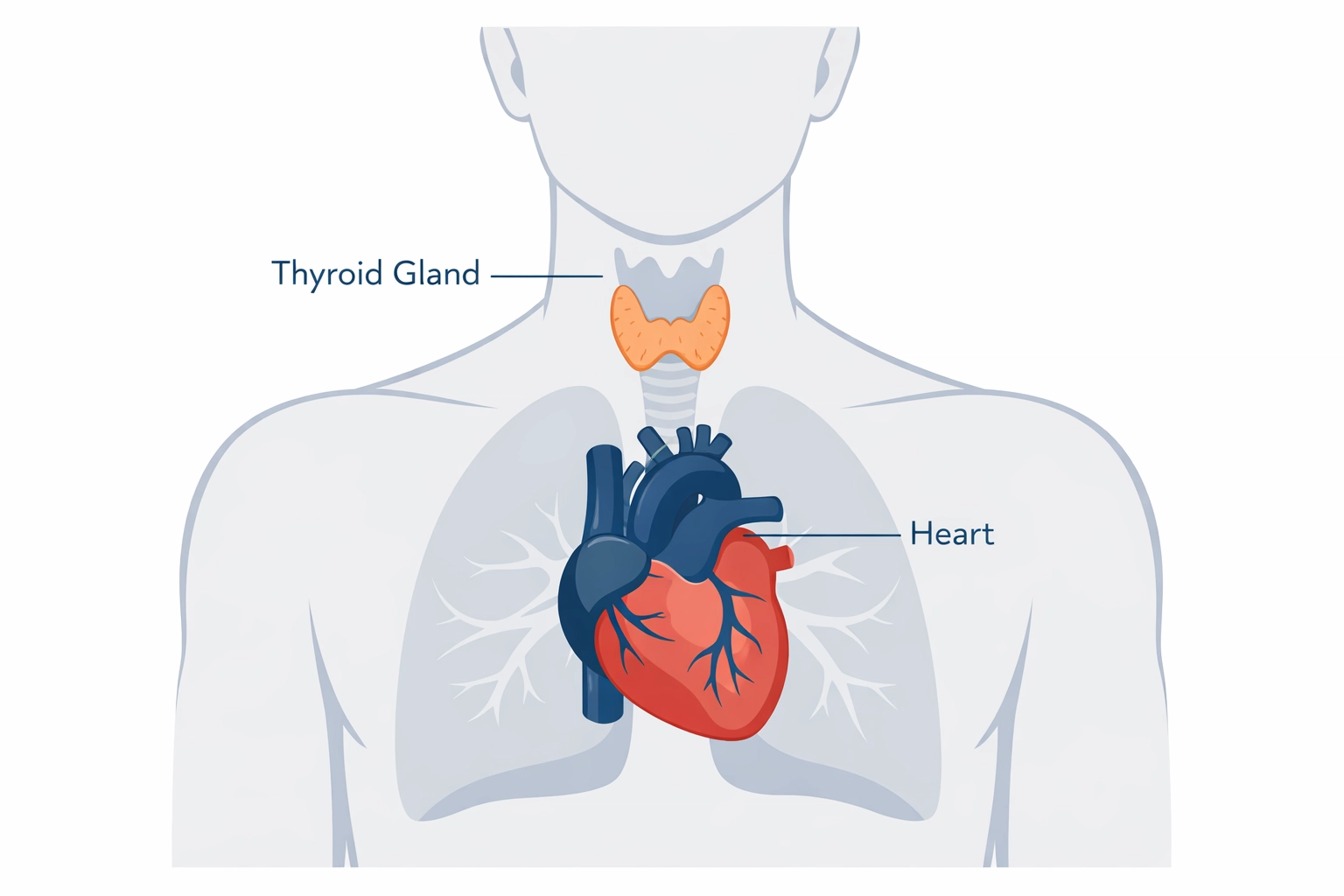
Thyroid Disorders: An overactive thyroid gland (hyperthyroidism) acts like a throttle for the body’s metabolism, often leading to a persistently fast or irregular heartbeat.
Electrolyte Imbalances: Your heart relies on minerals like potassium, magnesium, and calcium to conduct electrical signals. Dehydration or certain medications can throw these out of balance.
Fever and Infection: When the body fights an infection, the heart rate naturally rises to support the immune response.
When the Heart Rhythm is the Cause
While lifestyle factors are common, we must also consider "arrhythmias", conditions where the heart’s internal electrical system isn't firing correctly.
Atrial Fibrillation (AF)
AF is a common condition where the upper chambers of the heart (atria) quiver or "fibrate" rather than beating strongly. This leads to an irregular and often fast heartbeat. While AF itself isn't usually immediately life-threatening, it is important to diagnose because it can increase the risk of a stroke. Modern treatments are highly effective at managing this risk.
Supraventricular Tachycardia (SVT)
This is a rapid heartbeat that starts in the upper chambers. It often feels like a "switch" has been flipped, causing the heart to race at a very high speed for a few minutes before suddenly returning to normal.
Premature Ventricular Contractions (PVCs)
These are those "skipped beats" mentioned earlier. While they feel strange, in a healthy heart, they are almost always benign.
How a Consultant Assessment Helps
If your palpitations are persistent, frequent, or causing you significant worry, a professional medical review is the best next step. In a standard GP appointment, time is often very limited. In a private medical consultation, we have the luxury of time, usually an hour, to take a detailed history.
When I see a patient in Salford or via an online consultation, our assessment follows a structured path:
The Clinical History: We discuss exactly what the palpitations feel like, when they happen, and what makes them better or worse. This "detective work" is often more informative than any single test.
Physical Examination: Checking blood pressure, listening to heart sounds, and looking for signs of other issues like thyroid enlargement or anaemia.
The ECG (Electrocardiogram): A simple, painless test that records the heart's electrical activity at that specific moment.
Extended Monitoring: Since palpitations are often intermittent, a 10-second ECG might miss them. We may arrange for a "Holter monitor", a small, wearable device that records your heart rhythm for 24 hours, 48 hours, or even a full week as you go about your normal life.

Why Reassurance is a Clinical Tool
One of the most important outcomes of a consultant review is "informed reassurance." It is one thing to be told "you're fine," but it is much more powerful to understand why you are experiencing these sensations and to know that serious pathology has been systematically ruled out.
For many patients, once they understand that their "thumping" heart is a normal response to stress or caffeine, the symptoms become much less bothersome and often settle down on their own.
Next Steps
If you are noticing your heart rhythm more than usual, start by keeping a simple diary. Note down when the palpitations happen, how long they last, and what you were doing at the time (including what you had recently eaten or drunk).
If the symptoms persist, or if you simply want the peace of mind that comes from a thorough specialist review, you can book a private consultation with Dr Paraiso. Whether in person or via a secure online link, we can review your symptoms, arrange the necessary investigations, and provide a clear plan for your heart health.
This article provides general information only and is not a substitute for personal medical advice. If you are unwell or worried about a symptom, please speak to a healthcare professional. Call 999 or attend A&E immediately if you have severe chest pain, trouble breathing, signs of stroke, feel very unwell or think it is an emergency.

Comments