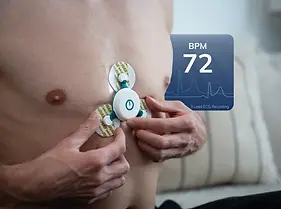
Consultant-Led Holter Monitoring
At Dr Paraiso Clinic, we provide private Holter monitoring and ambulatory ECG testing to help investigate symptoms that may be related to the heart rhythm.
Holter monitoring records the electrical activity of the heart continuously while you go about your normal daily activities. It is commonly used to investigate symptoms such as palpitations, dizziness, blackouts, unexplained episodes of rapid heartbeat, irregular pulse, chest discomfort, or intermittent symptoms that may not appear during a standard ECG.
Our service combines modern heart rhythm monitoring technology with consultant-led interpretation and clinical review.
We offer:
-
24-hour Holter monitoring
-
48-hour Holter monitoring
-
7-day heart rhythm monitoring
-
14-day extended ECG monitoring
-
Symptom-triggered ambulatory ECG monitoring
Available across the UK.
What is Holter Monitoring?
Holter monitoring is a portable heart monitoring test that continuously records your heart rhythm over an extended period.
Small adhesive electrodes are placed on the chest and connected to a lightweight recording device. The monitor records every heartbeat while you continue normal activities at home, work, or during sleep.
Unlike a standard ECG performed in clinic over a few seconds, Holter monitoring can detect intermittent abnormalities that may only happen occasionally.
Holter monitoring may help detect:
-
Irregular heart rhythms (arrhythmias)
-
Atrial fibrillation (AF)
-
Episodes of fast heart rhythm (tachycardia)
-
Slow heart rhythms (bradycardia)
-
Ectopic beats / extra heartbeats
-
Supraventricular tachycardia (SVT)
-
Heart rhythm pauses
-
Symptom-rhythm correlation

Symptoms That May Need Holter Monitoring
Holter monitoring is commonly used for patients with symptoms that come and go unpredictably.
Common reasons for referral include:
A sensation of pounding, fluttering, racing, skipped, or irregular heartbeats.
Especially if episodes are unexplained or recurrent.
Holter monitoring may help assess whether an abnormal heart rhythm contributed to symptoms.
Particularly when symptoms occur with episodes of rapid or irregular heartbeat.
Breathlessness Associated With Heart Racing
Some rhythm abnormalities can cause shortness of breath or reduced exercise tolerance.
Monitoring Known Arrhythmias
Holter monitoring may be used to assess treatment response or monitor previously diagnosed rhythm problems.

Which Holter Monitor Duration Is Best For Me?
The ideal monitoring duration depends largely on how often symptoms occur.
24-Hour Holter Monitor
Often suitable for daily symptoms.
48-Hour Holter Monitor
Useful when symptoms occur every few days.
7-Day ECG Monitoring
Provides longer rhythm surveillance and increases the likelihood of detecting intermittent abnormalities.
14-Day Heart Monitoring
Particularly useful for infrequent palpitations, dizziness, or suspected intermittent atrial fibrillation.
Longer monitoring periods often improve diagnostic yield for intermittent symptoms.
What Conditions Can Holter Monitoring Detect?
Holter monitoring may help identify or assess:
-
Atrial fibrillation (AF)
-
Atrial flutter
-
Supraventricular tachycardia (SVT)
-
Ventricular ectopic beats
-
Bradycardia
-
Tachycardia
-
Heart rhythm pauses
-
Intermittent arrhythmias
-
Symptom-rhythm correlation
In some cases, monitoring may also help reassure patients when symptoms occur without significant rhythm disturbance.

Consultant-Led Interpretation & Reporting
At Dr Paraiso Clinic, heart rhythm recordings are reviewed within a broader clinical context.
This is not simply a technical reporting service.
Monitoring results are interpreted alongside:
-
Your symptoms
-
Medical history
-
Medications
-
Cardiovascular risk factors
-
Associated symptoms and clinical concerns
Where appropriate, next steps may include:
-
Reassurance and monitoring
-
Further cardiac investigations
-
Echocardiography
-
Blood tests
-
Blood pressure assessment
-
Lifestyle and cardiovascular risk review
-
Referral to cardiology or electrophysiology services
Nationwide Private Holter Monitoring
Our ambulatory ECG service is available nationwide.
Depending on the monitoring pathway selected, devices may be:
-
Posted directly to your home
-
Fitted during clinic appointments
-
Used alongside remote clinical review
We provide services for patients across:
-
London (Harley Street)
-
Salford (Greater Manchester)
-
The wider UK
What happens during monitoring?
Add a general description of the items listed below. You can introduce the list and include any relevant information you want to share. Double click to edit the text.

Step 1: Choose Your Monitoring Duration
Monitoring options range from 24 hours to 14 days, depending on how frequently your symptoms occur and the type of assessment required.
Patients may either:
-
Book monitoring directly
or -
Undergo clinical review beforehand where appropriate

Step 2: Device Posted to Your Home
For most patients, the monitoring device is posted directly to your home with simple step-by-step instructions for self-application.
All devices use hypoallergenic electrodes or patches designed for comfort during normal daily activities.
Some monitoring pathways may include in-clinic fitting where appropriate.

Step 3: Wear the Monitor During Normal Activities
You continue your normal routine while the monitor continuously records your heart rhythm throughout the monitoring period.
You may be asked to record symptoms, timings, activities, or possible triggers to help correlate symptoms with the ECG recording.

Step 4: Return the Monitor
Once monitoring is complete, the device is returned using the prepaid return envelope provided.

Step 5: Analysis & Results
The recording is analysed and clinically interpreted within the context of your symptoms and overall clinical picture.
Results are usually available within 2–4 working days after the monitor is returned.
Optional cardiologist reporting is also available on request.
After your test
After your test you will receive:
-
A comprehensive rhythm summary
-
Explanation of any heart rhythm abnormalities detected
-
Risk assessment
-
Clear next steps for treatment, lifestyle changes or reassurance

24-Hour Patch Monitor
250
Wearable heart rhythm monitors are posted to you anywhere in the UK, with consultant interpretation and optional cardiologist review.
24 hours Monitoring period
Device posted nationwide with hypoallergenic patches
Easy self-fit instructions
Comfortable, shower-resistant patches
Prepaid return envelope
Results in 2–4 working days
Optional cardiologist report

48-Hour Patch Monitor
295
Wearable heart rhythm monitors posted to you anywhere in the UK, with consultant interpretation and optional cardiologist review.
Includes all features of the 24-hour monitor
Improves detection when symptoms don’t occur every day.
48 hours extended monitoring period

72-Hour Patch Monitor
320
Wearable heart rhythm monitors posted to you anywhere in the UK, with consultant interpretation and optional cardiologist review.
Everything included in the 48-hour Patch Monitor
Useful for intermittent symptoms or unclear patterns.
72 hours recoding period

7-Day Patch Monitor
340
Wearable heart rhythm monitors posted to you anywhere in the UK, with consultant interpretation and optional cardiologist review.
Everything included in the 72-hour Patch Monitor
7 days of continuous monitoring for infrequent symptoms

14-Day Patch Monitor
465
Wearable heart-rhythm monitors posted anywhere in the UK, with consultant interpretation and optional cardiologist review
Everything included in the 7-day Patch Monitor
Extended wear of 14 days to maximise diagnostic yield

Premium Patch ECG (Zio)
500
Wearable heart-rhythm monitors posted anywhere in the UK, with optional cardiologist review.
Industry-leading comfort and adhesive performance
Up to 14 days continuous monitoring
Designed for superior diagnostic accuracy and wearability
Choose your monitoring duration
All tiers include a detailed report.
You choose the level of monitoring and blood testing that suits your symptoms.
Flexible payment options available at checkout
Not sure if this is for you?
If you are unsure which monitoring duration is most appropriate, we can help guide you based on your symptoms, how often they occur, and your clinical concerns.
Whether you are experiencing occasional palpitations, dizziness, irregular heartbeat, or unexplained symptoms, we can help determine the most suitable monitoring option — from 24-hour monitoring to extended 14-day ECG patches.
No obligation • Consultant guidance • Nationwide UK service • Flexible payment options available
Our Services
Our services are designed to provide structured consultant assessment, tailored to the nature and complexity of your medical concern.
Related services





A 24-hour Ambulatory Blood Pressure Monitor (ABPM) is the most accurate way to assess your blood pressure throughout a normal day.
The device records your readings every 20–30 minutes during the day and hourly at night, giving a clear picture of how your blood pressure behaves outside the clinic.
ABPM helps diagnose:
Hypertension (high blood pressure)
White-coat hypertension (clinic readings higher than normal)
Masked hypertension (normal clinic readings, high at home)
Night-time (nocturnal
24-Hour Ambulatory Blood Pressure



Related Blogs & Guides
Explore our articles on palpitations, heart rhythm symptoms, Holter monitoring, atrial fibrillation, dizziness, and related cardiovascular concerns. These guides are designed to help patients better understand common symptoms, investigations, and possible next steps.


